
South Houston, TX · Garage Door Service
Garage Door Repair for South Houston Homes Built 1956 to 2014
South Houston's housing dates from 1956 to 2014, median 1983, and the original torsion springs and openers in that stock are reaching the end of their service life now.
- Repairs & new doors
- Springs & openers
- Serving 4 nearby communities
What Can Go Wrong
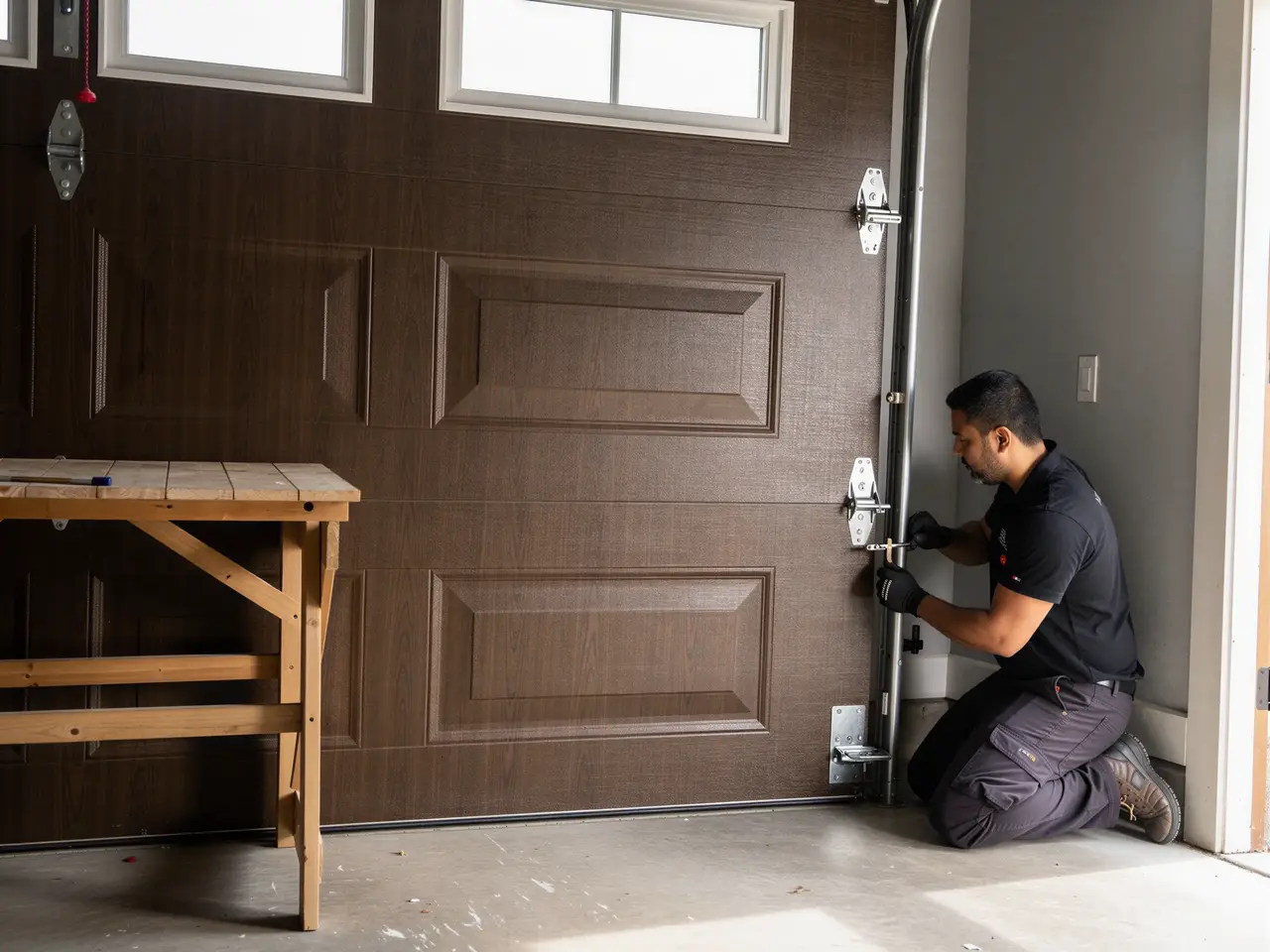
The door itself rarely quits all at once. What fails first is almost always one of four parts: the torsion spring, the rollers, the opener, or the cables. On a house with the original door - and a lot of South Houston houses still have theirs, since local construction runs from 1956 up through 2014 with the median landing around 1983 - the spring was sized for a door that's gotten heavier with every coat of paint and every added insulation kit over the decades. That spring doesn't fail gracefully. It snaps, usually on a cold morning when the steel has gone brittle overnight.
Rollers wear out quieter but just as completely. Steel rollers on 1980s and 90s tracks weren't built to run this many cycles, and once the roller flattens on one side, it starts chewing the track instead of rolling through it. Cables fray at the drum end and give no warning beyond a little slack you probably won't notice until the day it lets go.
Openers are the fourth failure point, and they're the one owners usually try to fix themselves before calling. A motor from that same build era is well past its rated cycle count, and the logic board inside it is not something you want to be guessing at with the door half up.
What Causes It Around Here
South Houston sits in a mild climate with occasional freeze days, not the deep-freeze cycling that cracks concrete up north. That matters for how garage doors fail here versus elsewhere: you're not looking at slab heave snapping tracks loose from the floor. You're looking at slower damage - humidity swelling wood jambs during the long warm stretch, then a hard overnight freeze a few times a winter that makes old spring steel go brittle right when it's under full load.
The bigger driver is simply age matching across the housing stock. With most of the service area's roughly 40,967 owner-occupied houses built between 1956 and 2014 and clustered heavily in that 1980s-90s window, a huge share of doors, springs, and openers installed back then are reaching end of life on roughly the same calendar. That's not a coincidence of bad luck - it's the same parts, installed the same decade, wearing out the same way.
Houses closer to the older side of town, including areas like Edgebrook or the Meadowbrook side, tend to still carry that original hardware since there's been less turnover to trigger a full door replacement. Newer construction mixed in across the area runs lighter openers and better rollers, so the failure pattern isn't uniform - it tracks the build year.
How It Shows Up
A spring going bad doesn't usually announce itself with a bang first. Most owners notice the door feels heavier when they lift it by hand, or the opener strains and groans partway through a cycle instead of running smooth top to bottom. If one side of the door looks lower than the other when it's open, that's a torsion spring losing tension unevenly, not a cosmetic issue.
Roller wear shows up as noise - a grinding or clunking at the same spot in the track every time, which means a flat-spotted roller is hitting that section on every pass. Left alone, it eventually jumps the track entirely, usually at the worst possible moment.
Cable fraying is harder to catch early. You might see the door jerk slightly as it travels, or settle slightly off-level when fully closed. By the time a cable visibly frays at the drum, it's close to done.
Opener trouble on older units often starts as intermittent remote response, then progresses to the door reversing for no reason, then to not responding at all. If your opener is original to a house built in the 1980s or 90s, intermittent failure is the part wearing out, not a settings problem.
Doing It Yourself
There's real work here a homeowner can safely do. Wipe down and lubricate the rollers and hinges twice a year, check that the photo-eye sensors near the floor are aligned and unobstructed, and tighten any loose bolts on the track brackets you can reach without climbing on anything unstable. Visually check cables for fraying while the door is down and the opener is unplugged.
What you should not do yourself is touch the torsion spring. It's under enough stored tension to break bones or worse if the winding cone slips, and that's true whether the spring is five years old or thirty. We won't talk you through doing that over the phone, and any guide that tells you it's a weekend project with hand tools is leaving out how often that job goes wrong.
The honest limitation here: if your opener and door are both original to a house built before the 1990s, patching one part usually just moves the failure to the next one within a year or two. At that point full replacement of the aging components costs less over time than repeated service calls on parts that are all at the same point in their life.
Frequently asked questions
Why did my garage door spring snap with no warning?
Torsion springs fail from metal fatigue after thousands of cycles, and the failure point is usually invisible until it happens. In a house built in the 1980s or 90s, a spring that's original to the house is well past the cycle count it was rated for, and a cold morning is often what pushes brittle steel over the edge.
Is it normal for my garage door to sound louder than it used to?
Grinding or clunking at the same spot in the track on every open-close cycle usually means a flat-spotted roller hitting that section repeatedly. It's common on original 1980s-90s steel rollers and it only gets louder and more damaging to the track the longer it's left.
Can I replace a garage door torsion spring myself?
We don't recommend it. A wound torsion spring holds enough force to cause serious injury if the winding cone slips, regardless of how old or new the spring is. This is one job worth calling for rather than handling with hand tools in a weekend.
My opener is original to the house - should I repair or replace it?
If the opener is original to a house built before the 1990s, repairing one failing part often just shifts the problem to the next worn component within a year or two. At that point, replacing the opener outright usually costs less over time than repeated service calls.
Related services
Related guides
By Neighborhood
Garage Door Repair across the South Houston area
We also handle garage door repair in these South Houston-area suburbs.
Book garage door service in South Houston
Call now or request a quote - tell us what the door is doing and where you are.