
South Houston, TX · Garage Door Service
Garage Door Repair for Manvel's Newer Housing Stock
Manvel homes were mostly built after 2010 - newer doors, newer openers, different failure points than the 1980s stock across the rest of our service area. Here's what that means for your repair.
- Repairs & new doors
- Springs & openers
- Serving 4 nearby communities
Stocked Parts
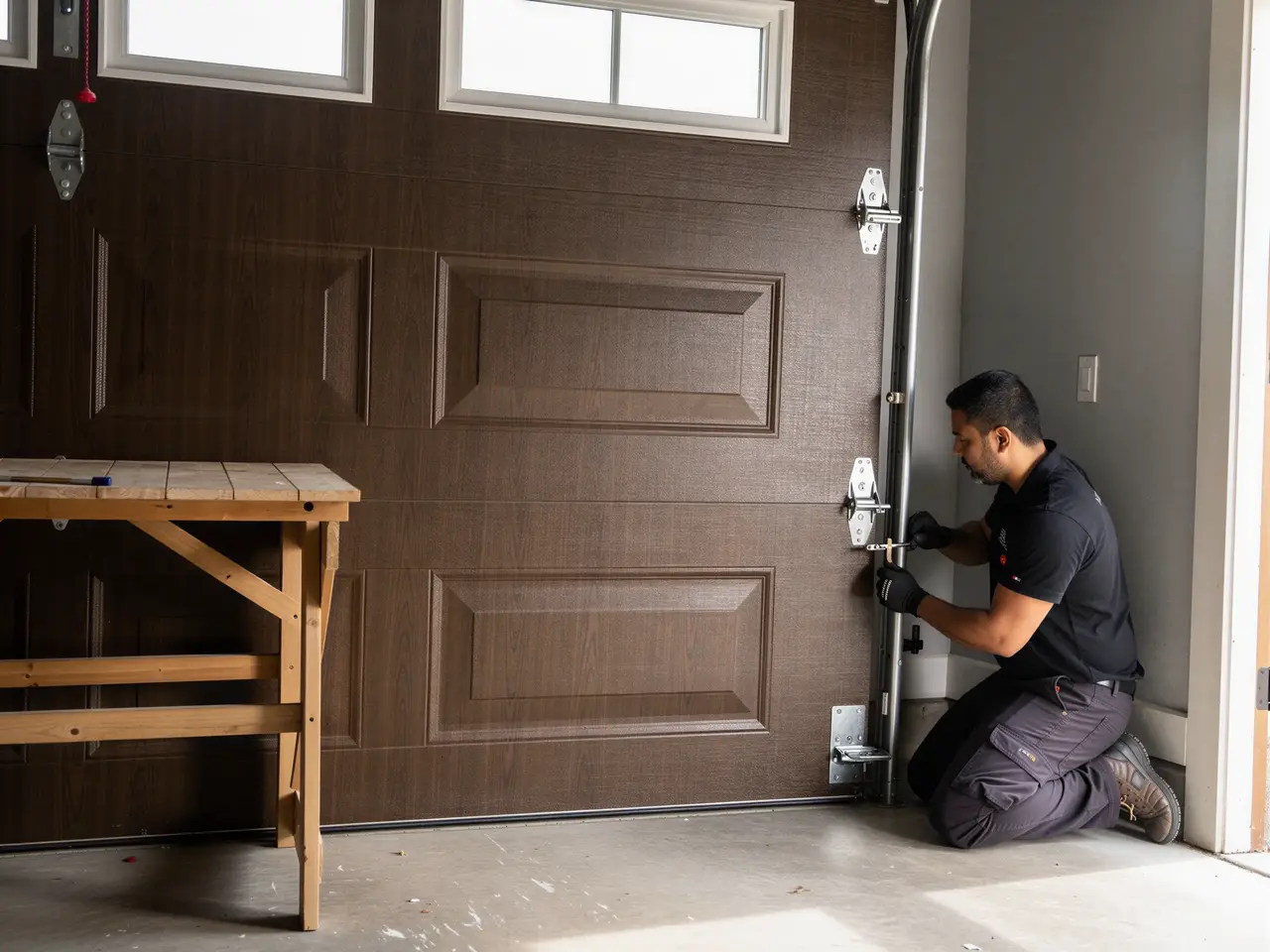
Most of the service area we cover was built out in the 1980s and 90s, median year 1983, so the truck carries a lot of parts sized for that era - older torsion spring wire gauges, steel rollers, the galvanized track profiles that match doors from that stretch. Manvel doesn't fit that mold. The housing here skews new, with a median build year around 2010, which means most doors we touch are newer steel or insulated panel units on nylon rollers and lighter-gauge torsion springs rated for tighter tolerances. We still stock the parts for both eras because the wider area needs them, but on a Manvel call the tech is more often reaching for a modern extension or torsion kit, a newer belt-drive opener board, or a photo-eye sensor from the last decade of production rather than anything older. If a part turns out to be a less common size for a newer opener model, that's the one case where we may need a day to get it rather than have it on the truck already.
Doing It Yourself
A door built in the last 10-15 years usually has an opener with diagnostic lights or an app that tells you an error code before you ever call anyone. Check that first - a blinking light pattern or a logged fault code narrows the problem faster than guesswork. Newer torsion springs are also wound tighter and under more stored force per inch than older, longer coils, so this is not the door to experiment on with the spring itself. Tightening a loose bracket, replacing a dead remote battery, or clearing a sensor that's gotten knocked out of alignment - those are fine to try. Winding bars and torsion springs are not, regardless of how new or clean the hardware looks.
How It Shows Up
On newer builds the opener is usually the first thing to show symptoms, not the door itself. You'll get a door that reverses partway up, a remote that works intermittently, or a keypad that stops responding before you ever notice a mechanical issue with the panel or track. Because the steel and hardware are younger, outright metal fatigue is rare here compared to areas with 1980s doors - when something fails in a newer system it's more often electronic (a logic board, a sensor, a failing drive gear in the opener) than a snapped spring or a bent track. Mild winters with the occasional freeze don't stress newer hardware the way decades of cycling stress old springs, so weather-driven failures are less common on this side of the service area too.
What the Fix Involves
For a Manvel call the fix usually starts with the opener, not the spring or track - pulling the cover, checking the board for a fault code, testing the sensors and the travel limits before touching anything mechanical. If it is mechanical, newer torsion springs and rollers are a more standardized size than the mix of odd dimensions you find on older housing stock, so sourcing the right spring is usually straightforward once the wire size and wind direction are confirmed. Track and panel work follows the same diagnostic order: rule out the electronics, then check alignment, then check the spring. We don't replace a working opener board just because it's acting up once - if a reset and a sensor realignment solve it, that's the job, not a bigger sale.
Time on the Job
A straightforward opener diagnostic and sensor fix on a newer system usually wraps up in well under an hour once the tech is on site. A torsion spring swap on newer hardware runs about the same as it would anywhere - the spring sizing is more standard here, which actually speeds up the job compared to matching an odd legacy spring from the 1980s stock elsewhere in the area. The variable is less the age of the door and more whether a specific opener part needs to be sourced, since newer logic boards for certain models aren't something every tech carries in volume.
What Can Go Wrong
The biggest risk on newer installs is misdiagnosis - replacing a spring or a roller when the real problem is a bad sensor or a software-level fault in the opener. A mild, occasional-freeze climate means moisture and temperature swings aren't the main driver of failure here the way they are in harsher climates, so when something does go wrong on a newer Manvel door, it's worth checking the electronics before assuming it's mechanical wear. The honest limitation: because we travel in from South Houston rather than keeping a depot in Manvel, a same-visit fix depends on the part being one we carry - less common opener boards for newer models sometimes mean a short wait for the part rather than a same-day resolution.
Frequently asked questions
Are Manvel garage doors different from the rest of the service area?
Mostly yes. The broader service area has a median build year around 1983, with a lot of 1980s-90s hardware. Manvel's housing is newer, median year around 2010, so the doors, openers, and spring sizing we see here skew toward more current, more standardized equipment.
Do you keep a branch in Manvel?
No. We work Manvel from South Houston, about 15 miles away. We carry the parts that fit the newer housing stock common here, but we don't have a local depot, so an uncommon part for a newer opener model can occasionally mean a short wait.
Why did my opener fail instead of the spring?
On newer builds like most of Manvel's housing, the opener's electronics usually show problems before the mechanical hardware does. Boards, sensors, and drive gears are the more common failure points on a door built in the last 10-15 years, compared to older stock where spring fatigue is more common.
Is it safe to try fixing a newer torsion spring myself?
No. Newer torsion springs are wound tight and store a lot of force even though the hardware looks clean and new. Loose brackets, dead batteries, and misaligned sensors are fine to handle yourself. Torsion springs are not, regardless of the door's age.
Book garage door service in South Houston
Call now or request a quote - tell us what the door is doing and where you are.