
South Houston, TX · Garage Door Service
Garage Door Cable Repair, South Houston TX
Broken or frayed garage door cables are common on South Houston homes built between 1956 and 2014. We repair cable failures fast across the service area.
- Repairs & new doors
- Springs & openers
- Serving 4 nearby communities
What Can Go Wrong
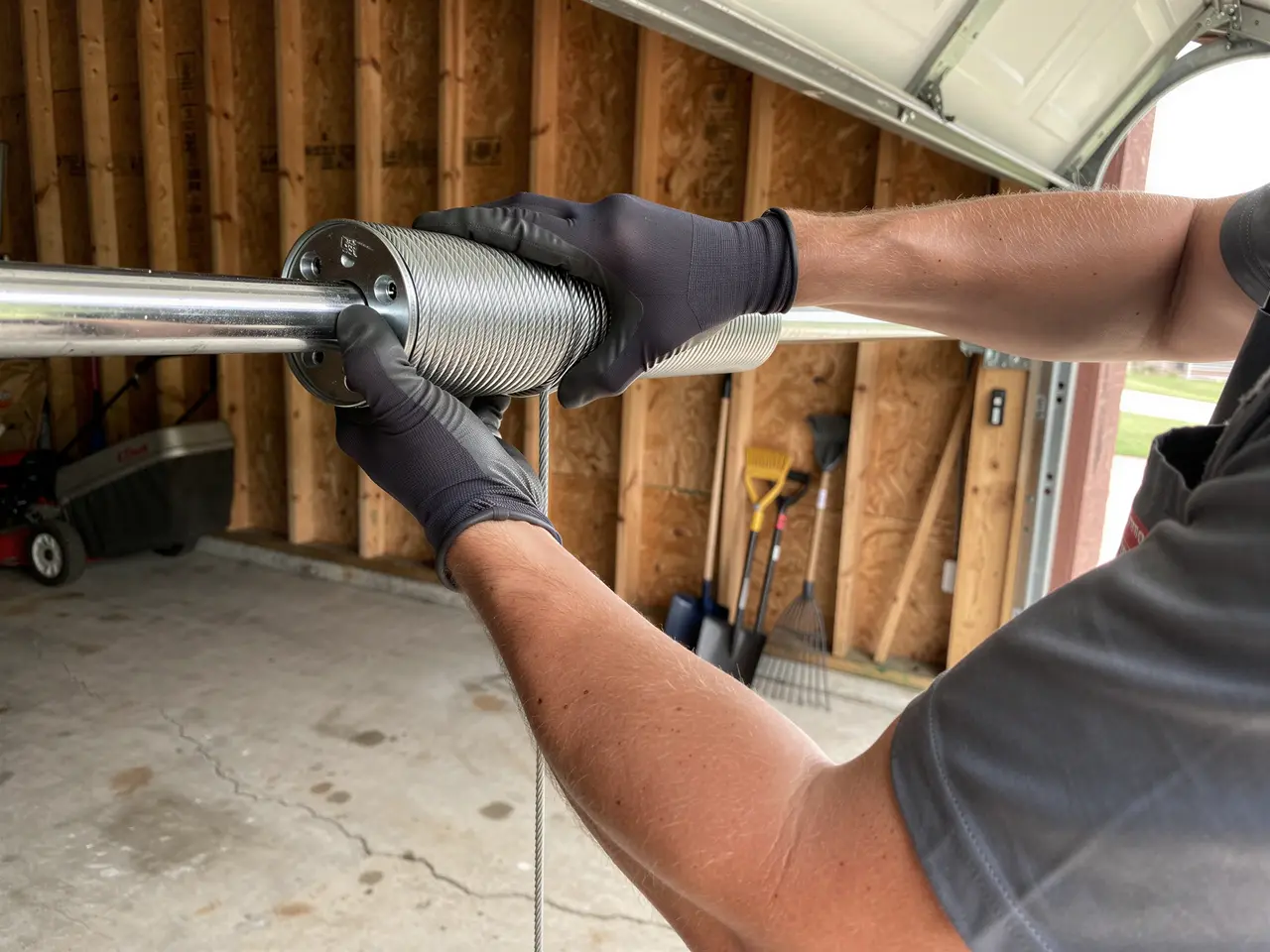
A garage door has two lift cables, one on each side of the door, wound onto a drum at the top of the track. Those cables carry the full weight of the door every time it moves, and they fail in a few specific ways. A cable can snap clean through at the bottom bracket, usually with a loud bang and the door dropping on one side. A cable can fray a few strands at a time along the drum or near the bottom roller bracket, which is the slow version of the same failure - you get warning before it lets go all the way. A cable can also jump its groove on the drum and wind unevenly, which throws the door off level even though nothing has broken yet.
Any of these leaves you with a door that won't open, won't close square, or binds partway through its travel. On a double door, a single bad cable on one side is enough to make the whole panel rack sideways in the track, which then stresses the rollers and hinges on that side too. We don't recommend running a door on one working cable even for a day - it accelerates wear on everything else and raises the chance the second cable goes while the door is open overhead.
What Causes It Around Here
Housing across this service area runs from 1956 up through 2014, with the median build year landing around 1983, and the bulk of the stock across the named areas we cover dates to the 1980s and 90s. That matters for cables because a lot of those original garage door systems are still running their original hardware, or a first replacement set installed decades ago. Steel aircraft cable doesn't have an infinite life - it work-hardens and frays with cycle count, and a door built in the early 80s has had a lot of open-close cycles by now.
The climate band here is mild with only occasional freeze events, so we don't see the hard freeze-thaw cracking that snaps cables in colder regions. What we see instead is slower corrosion - humidity working into the cable strands over years, especially on doors near a side gate or a hose bib where moisture sits on the hardware. That kind of wear is quiet. A cable can look fine from across the garage and still be down to a handful of strands at the drum. It's the age of the housing stock combined with that steady humidity, not a single hard event, that drives most of the cable calls we get in this area.
How It Shows Up
The most obvious sign is a door that drops unevenly - one corner lower than the other, or the whole panel tilted in the track. Sometimes it's sudden: a bang from the garage, and the door won't move or moves and then jams a few inches in. Other times it's gradual - the door starts closing a little crooked, then more crooked each week, and you can see the cable winding wrong on the drum if you look up at the top corner.
A fraying cable sometimes shows itself as a faint scraping or ticking sound as the door travels, especially right as it passes the point where the cable rides the drum. If you see bent wire strands sticking out near the bottom bracket, that cable is close to going and the door shouldn't be run again until it's replaced. A door that reverses on its own partway through closing can also point to a cable problem rather than an opener problem, since an opener with travel-limit safety logic will stop or reverse when it senses the door isn't moving evenly.
Doing It Yourself
We'll be straight about this one: cable work is not a weekend project, and we don't recommend it. The cable is under tension from the door's weight and, on most residential doors, from torsion or extension springs working against it at the same time. Cutting or disconnecting a cable with the door in the wrong position, or without the spring tension released first, is how people end up hurt - a cable or spring letting go under load moves fast and hits hard.
There are a few things you can safely check yourself before calling anyone. Look at the cable where it wraps the bottom bracket and the drum for visible fraying, and listen for new noise during a cycle. If you see a frayed cable, leave the door down, unplug the opener, and don't force it. That's the limit of the DIY part. Replacing the cable itself means releasing spring tension safely, which takes the right clamps and a known process - it's the kind of job where the cost of doing it yourself wrong is a trip to the emergency room, not just a redo.
Frequently asked questions
How much does it cost to fix a garage door cable?
We don't quote a flat number here since it depends on whether one or both cables need replacing and whether the drums or rollers were damaged when the cable let go. Call for a price specific to your door.
Can I just replace one cable if the other looks fine?
We generally replace both lift cables together, even if only one has failed. They wear on roughly the same schedule, and running a new cable against an old one on the opposite side just means a second service call soon after the first.
Is a snapped cable the same as a broken spring?
No. A broken spring usually means the door feels very heavy or won't lift at all when you try by hand. A snapped cable usually drops the door unevenly or jams it partway through travel. They sometimes happen close together since both carry the door's weight, but they're different parts.
Related services
By Neighborhood
Cable Repair across the South Houston area
We also handle cable repair in these South Houston-area suburbs.
Book garage door service in South Houston
Call now or request a quote - tell us what the door is doing and where you are.