
South Houston, TX · Garage Door Service
Weather Seals and Drafts: What's Actually Happening at Your Door
A look at why garage door seals fail in South Houston's mild, occasional-freeze climate, and what the typical 1983-era door in this area means for your draft problem.
- Repairs & new doors
- Springs & openers
- Serving 4 nearby communities
When to Call Someone
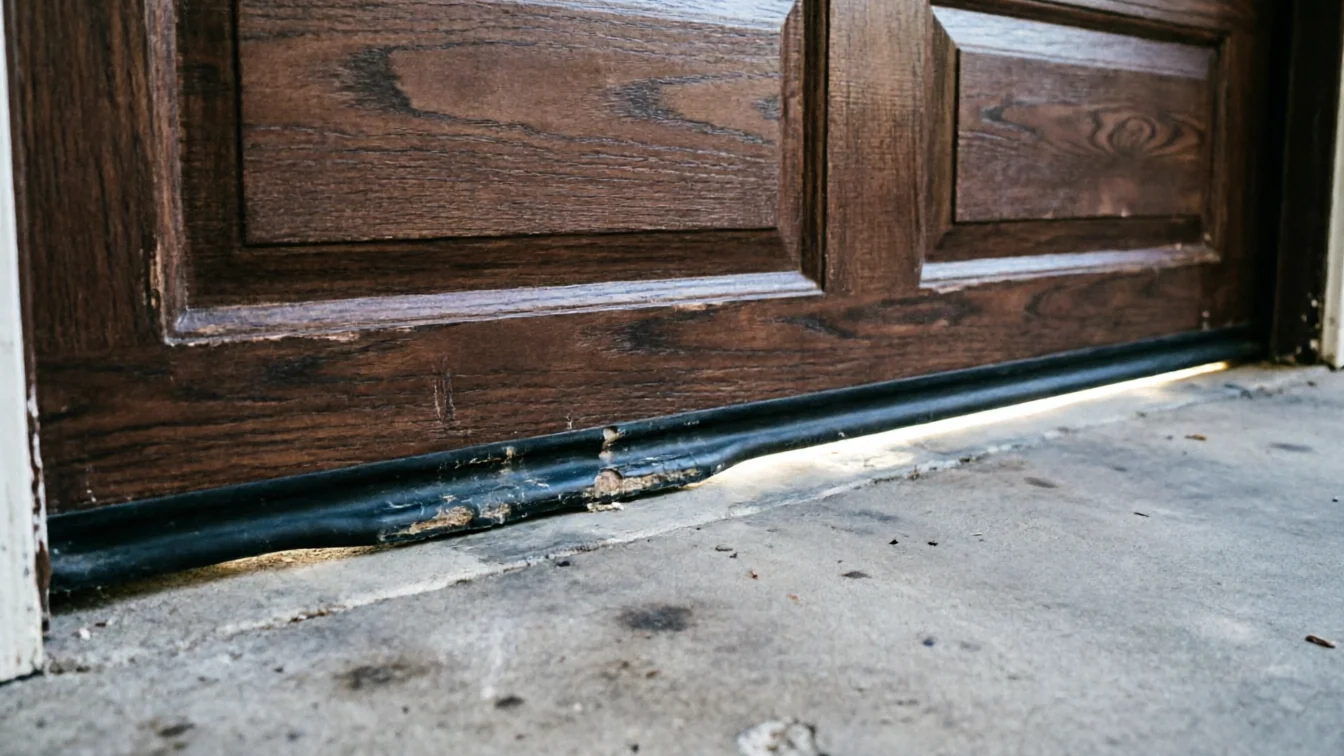
Call if the bottom seal is cracked clean through, flattened to the point it doesn't spring back, or pulling away from the track at a corner. Same if you're seeing daylight along the whole bottom edge when the door's closed, or if water is actually getting in during rain instead of just a draft. On houses built in this part of South Houston between 1956 and 2014 - median around 1983 - a lot of garage doors are still running weatherstripping close to original spec. That rubber hardens over time, and once it's hard it stops sealing no matter how you adjust the track. If the seal is brittle enough to snap when you flex it with your hand, that's not a wait-and-see repair, that's a replace-it-now job, because a cracked seal lets in more than air - it lets in whatever's walking or crawling around outside. We also get calls where the draft turns out to be a bent track or a sagging panel pulling the door out of square, not the seal itself. That's worth a look from someone who can tell the difference before you spend money on the wrong fix.
When Waiting Is Fine
A thin line of daylight at one bottom corner, or a draft you only notice standing right next to the door, isn't an emergency. South Houston's climate band is mild with only occasional freezes, so you're not fighting the kind of deep cold that turns a small gap into a frozen, stuck door overnight. If the door still closes flush, latches fine, and the gap is cosmetic rather than functional, it's reasonable to let it sit until you're doing other work on the door anyway. Seasonal swelling and shrinking of wood trim around the opening can open and close small gaps on its own as humidity shifts, so don't chase every draft you feel on a given afternoon. Where I'd draw the line: if you're noticing the gap getting worse month over month, or if it lines up with a section of seal that already looks sun-cracked, that's the signal to stop waiting. Letting a minor draft sit for a season costs you a little in comfort and maybe a few dollars in cooling. Letting a torn seal sit costs you water damage and pests.
What Is Going On
Vinyl and rubber weatherstripping doesn't fail from one event - it fails from years of heat cycling, UV exposure, and the door opening and closing against it thousands of times. In a climate like this one, where summers run hot and freezes are rare rather than routine, the seal's enemy is sun and heat more than ice. The material dries out, loses flexibility, and eventually cracks or shrinks away from the edges it's supposed to cover. A lot of the garage doors across the 23 named areas in this service territory are from that 1980s-to-90s stock, which means the seals on them, if never replaced, are old enough to have gone through three or four decades of that cycle. Once the rubber hardens, it stops compressing against the slab or the track the way it did when new, and that's where the draft comes from - not a hole, just a seal that can no longer flex to close the gap. Replacing the bottom seal and side weatherstripping is usually a straightforward swap, but matching the track profile on an older door sometimes takes more time to source than people expect.
How Local Conditions Play In
The mild-with-occasional-freeze climate band here means your seals age differently than they would in a place with hard winters. There's no annual freeze-thaw cycle working the rubber the way road salt and ice work pavement elsewhere - instead it's steady heat and sun that do the damage. That matters for timing: you're less likely to get an abrupt failure on the first cold snap and more likely to watch a seal degrade gradually over several summers before it finally gives out. In close-in neighborhoods like Edgebrook Area and Meadowbrook, both inside a couple miles of the service area's older housing stock, doors from that 1980s-90s build window are hitting the age where original seals have outlived their flex. Across the broader service area, with roughly 41,000 owner-occupied houses, a meaningful share are sitting on weatherstripping that's never been swapped. When one of those rare freeze mornings does hit, a seal that's already gone brittle from years of sun can crack outright instead of just stiffening up for the day - which is usually when people finally notice the draft they'd been living with all along.
Frequently asked questions
Why is my garage door seal cracking if it almost never freezes here?
In this climate the bigger stress on weatherstripping is sun and heat, not ice. Years of UV exposure and heat cycling dry out the rubber until it loses flexibility, and that's what causes the cracking you're seeing, especially on older doors that still have their original seal.
My house is from the 1980s - is the seal original?
It's possible. A lot of the housing in this area was built in the 1980s and 90s, and if nobody's mentioned replacing the garage door weatherstripping, there's a decent chance it's the factory seal, which at that age has likely hardened past the point of sealing well.
Can I just caulk the gap instead of replacing the seal?
Caulk isn't a fix for a moving part - the seal has to flex every time the door opens and closes, and caulk will crack and fall out fast under that movement. It's a short-term patch at best, not something to rely on for the long run.
How do I know if it's the seal or the track causing the draft?
If the gap is even along the whole bottom edge, it's usually the seal. If the gap is bigger on one side than the other, or the door looks crooked when closed, that's more likely a track or alignment issue, which is a different repair.
Related garage door services in South Houston
More garage door guides
Book garage door service in South Houston
Call now or request a quote - tell us what the door is doing and where you are.