
South Houston, TX · Garage Door Service
Garage Door Trouble in South Houston: What Actually Breaks and Why
South Houston's 1980s-era housing and mild, freeze-prone climate wear on torsion springs and tracks in predictable ways. Here's what actually breaks and why, before you call anyone.
- Repairs & new doors
- Springs & openers
- Serving 4 nearby communities
What Can Go Wrong
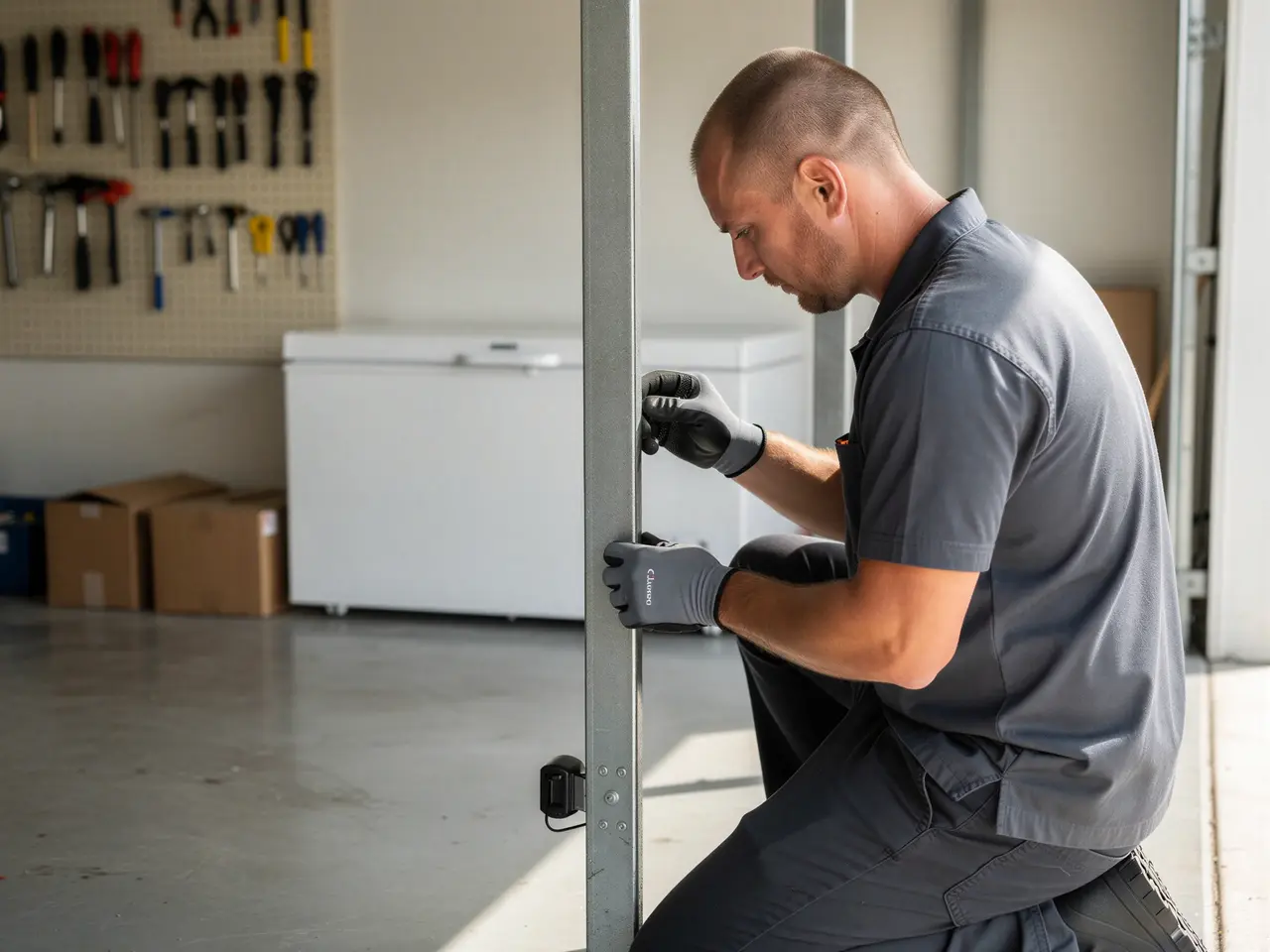
The failures we see most in South Houston aren't random. A torsion spring loses tension and snaps, usually on a cold morning when the steel is stiffest and least forgiving. Rollers wear out of round and start chewing at the track instead of rolling through it. Cables fray where they wrap the drum, especially on doors that get opened and closed several times a day. Openers burn out their gear sets or lose the logic board to a power surge after a storm.
On older sectional doors - and across this service area, built mostly between 1956 and 2014 with a concentration in the 1980s and 90s - the hardware itself is often original or close to it. That means springs sized for a door that's since been re-skinned, or a track bent slightly out of plumb decades ago and never fully corrected. None of these faults show up overnight. They build for months, sometimes years, and then let go on a day that feels unremarkable.
We don't chase every noise a door makes. Some rattle is just age and nothing more. The ones worth a call are the ones below.
What Causes It Around Here
Houston's garage door problems trace back to two things: how old the hardware is, and what the air does to it. Across the 23 named areas in this service territory, the housing stock clusters tightly around a median build year of 1983, which puts a lot of torsion springs and galvanized track well past their expected cycle count - springs are rated in cycles, not years, and a door opened twice a day for forty years has worked harder than the rating assumes.
The climate here sits in a mild band with occasional freezes, not the deep-freeze cycling that cracks concrete up north, but enough humidity swing to matter. Galvanized coatings on springs and cable wear thin faster in a climate that's warm and wet most of the year with the occasional cold snap than in a dry one. Rust doesn't need a freeze to start - it needs moisture that doesn't fully evaporate between cycles, and that describes most of the year along the Gulf Coast corridor this service area sits in, from Galena Park six miles off to Jacinto City at seven.
Put those two together - 1980s-vintage hardware and a climate that corrodes steel slowly but constantly - and you get the specific failure pattern we're called out for: not catastrophic breaks, but slow degradation that finally gives out.
How It Shows Up
A spring going bad rarely announces itself outright. The door gets heavier to lift by hand, the opener starts straining and clicking on its gear, or the door comes down a little crooked because one spring is still holding and the other isn't. Across the 61,397 households in this service area, with roughly 40,967 of them owner-occupied houses built in that same early-80s window, we see this exact progression constantly - it's a function of the hardware's age, not bad luck.
Track and roller wear shows up as a grinding or popping sound right as the door passes the bend where the vertical track meets the horizontal. Cable fray is quieter - you might just notice the door sitting slightly off-level in the opening, tilted toward whichever side is about to go.
Opener failures after a surge usually look like a dead keypad or a door that reverses for no reason partway through closing. That one's electrical, not mechanical, and it's worth ruling out before you touch a spring or cable at all.
Doing It Yourself
Some of this is reasonable to handle yourself. Lubricating rollers and hinges, tightening loose hardware, clearing track debris, and resetting opener travel limits are all jobs a homeowner can do with basic tools and twenty minutes.
A torsion spring is not that job. It's wound under several hundred pounds of tension, and the tools to release that tension safely - winding bars, a correctly sized socket, a ladder set up right - are not things most garages have lying around. We'd rather tell you that straight than let you find out the hard way.
Here's the honest limitation: if your opener's logic board is fried from a surge, we can usually swap the unit, but we don't stock every discontinued board for openers from the 1980s and early 90s, and parts for the oldest units sometimes take longer to source than the repair itself. On a door that old, replacing the opener outright is often the more practical call than waiting on a part that may not show up.
Frequently asked questions
Why did my garage door spring snap with no warning?
It wasn't no warning - it was slow warning you couldn't hear. Springs rated for a set number of cycles weaken gradually as galvanized coating thins from years of Gulf Coast humidity. On a house from the 1980s median build era common here, that spring has likely done more cycles than it was rated for, and it finally gave out on an ordinary day.
Does South Houston's climate really affect garage door hardware?
Yes. The mild, occasionally freezing climate here isn't harsh in the way a hard winter is, but constant humidity with only mild freeze events corrodes galvanized steel springs and cable slowly and continuously, rather than in one dramatic event. That steady wear is why older hardware in this service area tends to fail from fatigue rather than sudden damage.
Is it worth fixing an opener from the 1980s or just replacing it?
Depends on the fault. A dead capacitor or a worn gear is usually a fair repair. A fried logic board on a unit that old is a different call - parts for discontinued 80s and early-90s openers aren't always in stock, and a full swap often ends up cheaper and faster than waiting on a sourced part.
By Neighborhood
Garage Door Service across the South Houston area
We also handle garage door service in these South Houston-area suburbs.
Book garage door service in South Houston
Call now or request a quote - tell us what the door is doing and where you are.