
South Houston, TX · Garage Door Service
Garage Door Panel Replacement in South Houston
Cracked or bowed garage door panels show up often on South Houston homes built in the 1950s-80s. See why panels fail here and what replacement involves.
- Repairs & new doors
- Springs & openers
- Serving 4 nearby communities
What Can Go Wrong
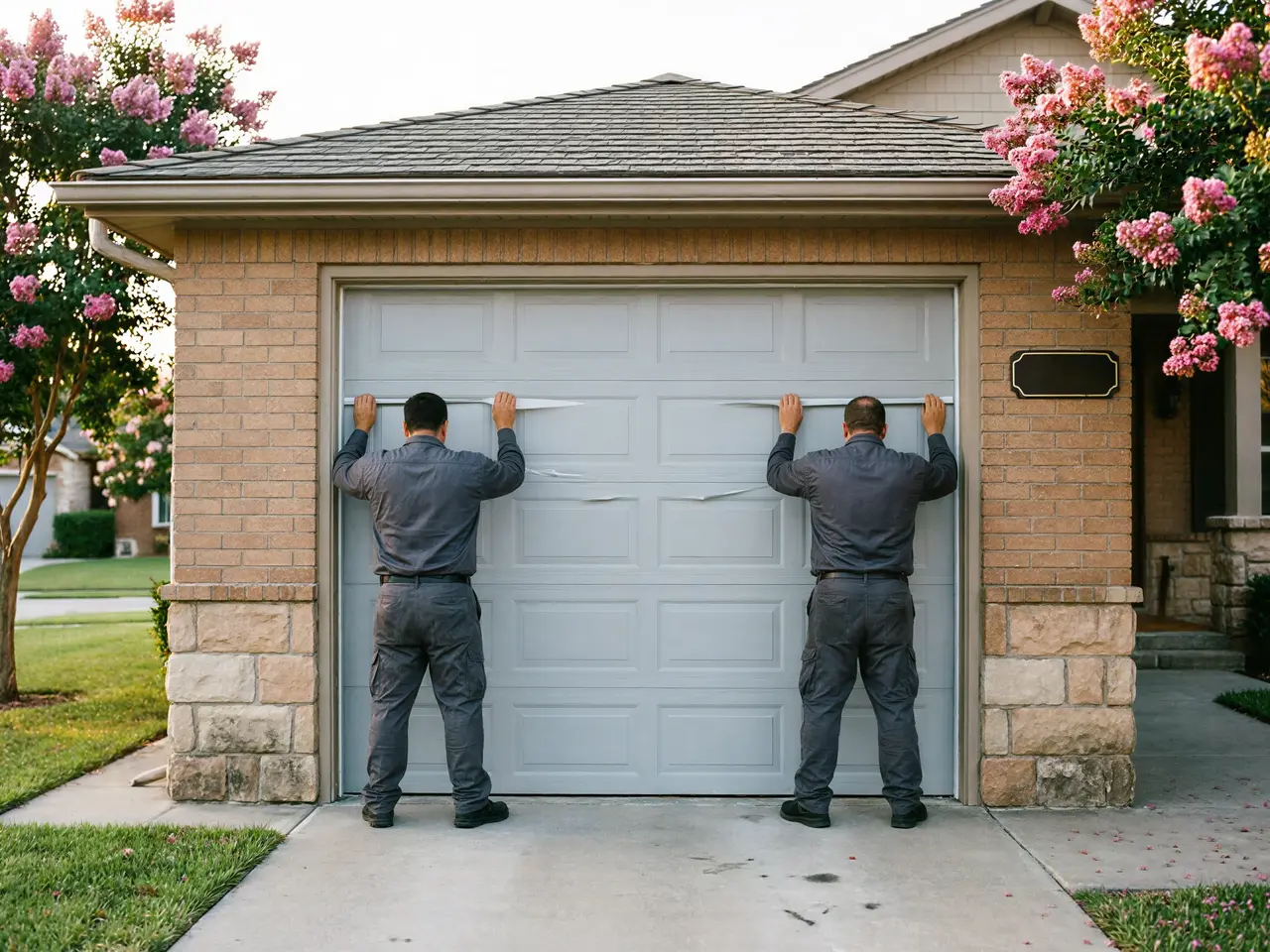
A garage door is built in sections, and it's almost always one section that fails first, not the whole door. The bottom panel takes the brunt of it - a car bumper taps it, a trailer hitch catches the edge, a kid's bike clips it backing out. You get a dent that throws off the curve of the panel, which then binds against the track every time the door cycles.
On older steel doors, rust is the other failure mode. It starts at the bottom edge where water sits after rain, works its way under the paint, and eventually the metal thins out and bows. Wood-composite panels, more common on the older end of the housing stock here, delaminate instead - the layers separate and the panel goes soft and spongy at the corners.
Less obvious: a cracked panel seam that lets daylight through at the joints. That's not cosmetic. It means the panel has flexed past what the steel or composite can take, and the hinge bolts holding it to the next section are working loose. Left alone, that section eventually tears free from the roller bracket, and now you've got a door that won't track straight at all.
What Causes It Around Here
Housing across this service area was built mostly between 1956 and 2014, with the median landing around 1983, and the bulk of it dates to the 1980s and 90s. That matters for panels specifically because that's the era when a lot of builders switched from heavier wood-composite sections to lighter steel - steel that dents instead of splitting, and rusts instead of rotting. Either way, thirty-to-sixty-year-old panels are reaching the end of what the original material can take.
The climate band here is mild with the occasional freeze, which isn't hard on panels the way a true freeze-thaw cycle is further north. What it does instead is keep humidity in the air most of the year, and that humidity sits on steel panels longer than it would in a drier climate. You get surface rust starting at the bottom edge and working up, slow and steady, long before a homeowner notices anything beyond a little bubbling in the paint.
With 61,397 households across the area and 40,967 of them owner-occupied, you've got a lot of garages, a lot of driveways, and a lot of daily contact between cars, bikes, and the bottom few inches of a garage door. That's the mundane cause behind most of the panel calls we get - not weather, just use.
How It Shows Up
The first sign is usually visual before it's functional: a dent at bumper height on the bottom panel, a rust bloom along the lower edge, or daylight showing at a seam that used to be tight. The door still opens and closes, so people live with it for a while.
It turns into a functional problem when the dent is deep enough to change the panel's curve. The door starts to bind in the track on that side, the opener strains a little harder on every cycle, and you'll hear a new scrape or a new rattle that wasn't there before. On rusted panels, the metal eventually gets thin enough that it flexes visibly when the door moves - you can watch the bottom section bow slightly as it comes down.
Composite panels show it differently. The corners get soft first, you can press a thumb in and feel give where there used to be none, and the panel starts pulling away from the hinge at that corner. That's usually the point where a patch isn't realistic anymore and the panel needs to come out and get replaced, not filled or braced.
Doing It Yourself
Swapping a single panel is sometimes a reasonable DIY job - if the door is still in production and the manufacturer still stocks that exact panel profile. That's the catch. A lot of the steel and composite doors installed here in the 1980s and 90s are long out of production, and finding a matching panel means hunting a salvage yard or special-ordering from whatever's left of the original manufacturer's line, if they're still in business at all.
If you do find a match, the panel swap itself involves disconnecting the door from the opener, pulling the roller brackets and hinges off the damaged section, and transferring them to the new panel - all while the door is under spring tension. That tension is the part we don't recommend doing yourself. A torsion spring lets go fast and hard, and it's not a job where a mistake means starting over; it means a trip to the ER.
The honest math: if the door is old enough that the panel is hard to match, replacing the whole door often costs less in time and hassle than chasing a discontinued part. We'll tell you straight which situation you're in before we quote anything - matching a panel isn't always worth doing just because it's technically possible.
Frequently asked questions
Can you replace just the bottom panel instead of the whole door?
Often, yes - if your door's manufacturer still makes that panel profile. Doors installed in the 1980s and 90s are the hardest to match since a lot of those production runs have ended. We check the door's make and panel style first and tell you honestly whether a single-panel swap is realistic or whether a full door makes more sense.
Why does my garage door panel keep rusting even though it doesn't freeze much here?
The mild, humid climate in this area keeps moisture sitting on steel panels most of the year, which drives slow surface rust along the bottom edge - even without hard freezes. It's a steady process, not a storm event, which is why it often goes unnoticed until the paint starts bubbling or the metal thins enough to flex.
Is a dented panel just cosmetic?
Not always. A shallow dent is cosmetic, but a deep one changes the curve of the panel enough to bind against the track. If the door is scraping, catching, or the opener sounds like it's working harder, the dent has gone past cosmetic and into a tracking problem.
Related services
By Neighborhood
Panel Replacement across the South Houston area
We also handle panel replacement in these South Houston-area suburbs.
Book garage door service in South Houston
Call now or request a quote - tell us what the door is doing and where you are.